Lifting equipment is only as safe as the people operating and managing it.
Even well-maintained cranes, forklifts, hoists, and other lifting equipment can create serious risks when operated by individuals who lack the necessary knowledge, skills, and competence.
This is why lifting equipment operator training is an essential part of workplace safety and operational excellence.
Proper training helps operators understand how to use equipment correctly, identify hazards, follow safe operating procedures, and respond appropriately to potential risks.
Why Lifting Equipment Operator Training Is Important
Lifting operations involve significant risks, particularly when heavy loads are moved in busy or hazardous environments.
Inadequate training can contribute to:
- Load instability
- Equipment misuse
- Poor lifting practices
- Collision incidents
- Dropped loads
- Damage to equipment
- Injury to workers
- Operational disruption
Competent operators are better prepared to understand equipment limitations and carry out lifting operations responsibly.
What Does Lifting Equipment Operator Training Cover?
The content of training depends on the type of equipment and the specific role of the operator.
Training may cover:
- Equipment identification
- Equipment components and controls
- Safe operating procedures
- Load capacity and limitations
- Pre-use checks
- Hazard identification
- Safe lifting techniques
- Communication and signalling
- Emergency procedures
- Equipment care and maintenance awareness
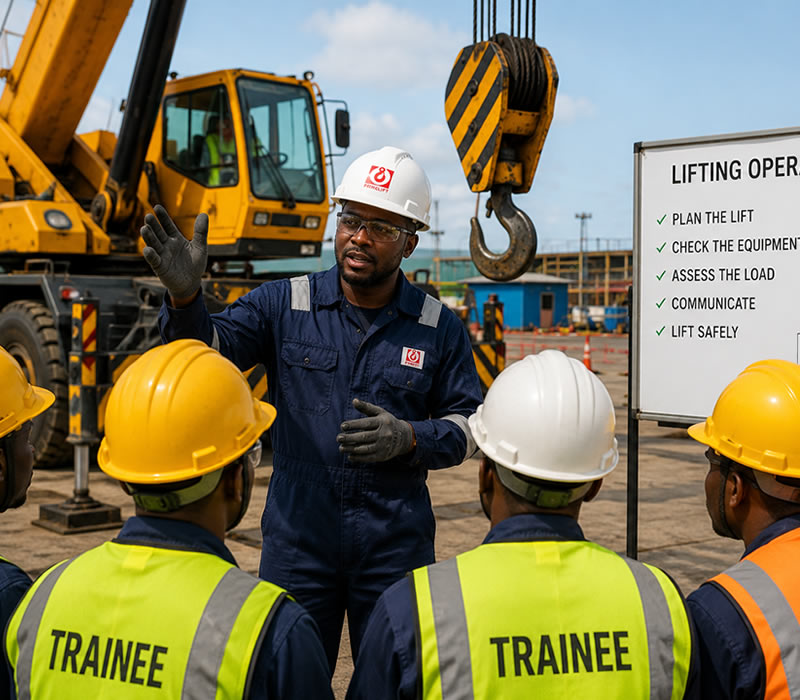
Practical training is particularly important because operators need to demonstrate their ability to apply knowledge in real or realistic working conditions.
The Role of Competence in Workplace Safety
Training is not simply about receiving a certificate. The goal is to develop genuine competence.
A competent operator should have the appropriate combination of:
- Knowledge
- Practical skills
- Experience
- Understanding of hazards
- Ability to follow safe procedures
Employers should also ensure that operators receive appropriate supervision and refresher training where necessary.
Training for Different Industrial Environments
Lifting equipment operators may work in a variety of environments, including:
- Oil and gas facilities
- Construction sites
- Manufacturing plants
- Warehouses
- Ports and marine environments
- Power facilities
- Offshore operations
Each environment may present different hazards and operational challenges. Effective operator training should therefore reflect the type of equipment and the conditions in which it will be used.
Benefits of Professional Operator Training
Investing in professional lifting equipment operator training can help organisations:
- Improve workplace safety
- Develop competent operators
- Reduce equipment misuse
- Improve operational efficiency
- Support compliance
- Reduce avoidable damage
- Promote a stronger safety culture
Training also demonstrates an organisation’s commitment to investing in its people and maintaining high standards of operational performance.
Choosing a Professional Training Provider
When selecting a lifting equipment operator training provider, consider:
- Trainer competence and experience
- Industry knowledge
- Practical training capability
- Relevant standards and procedures
- Training documentation
- Assessment processes
- Experience with the specific equipment type
At Primelift Engineering Nigeria Ltd, our training approach is focused on developing knowledge, practical competence, and a strong understanding of safe lifting operations.
Competent lifting equipment operators are essential to safe and efficient industrial operations.
Through effective training, assessment, and continuous development, organisations can help ensure that personnel are better prepared to operate lifting equipment responsibly and safely.
Whether you operate in the oil and gas, construction, manufacturing, marine, or power sector, professional operator training can help strengthen your workforce and support a safer working environment.
Contact Primelift Engineering Nigeria Ltd for professional lifting equipment operator training designed to support competence, safety, and operational excellence.